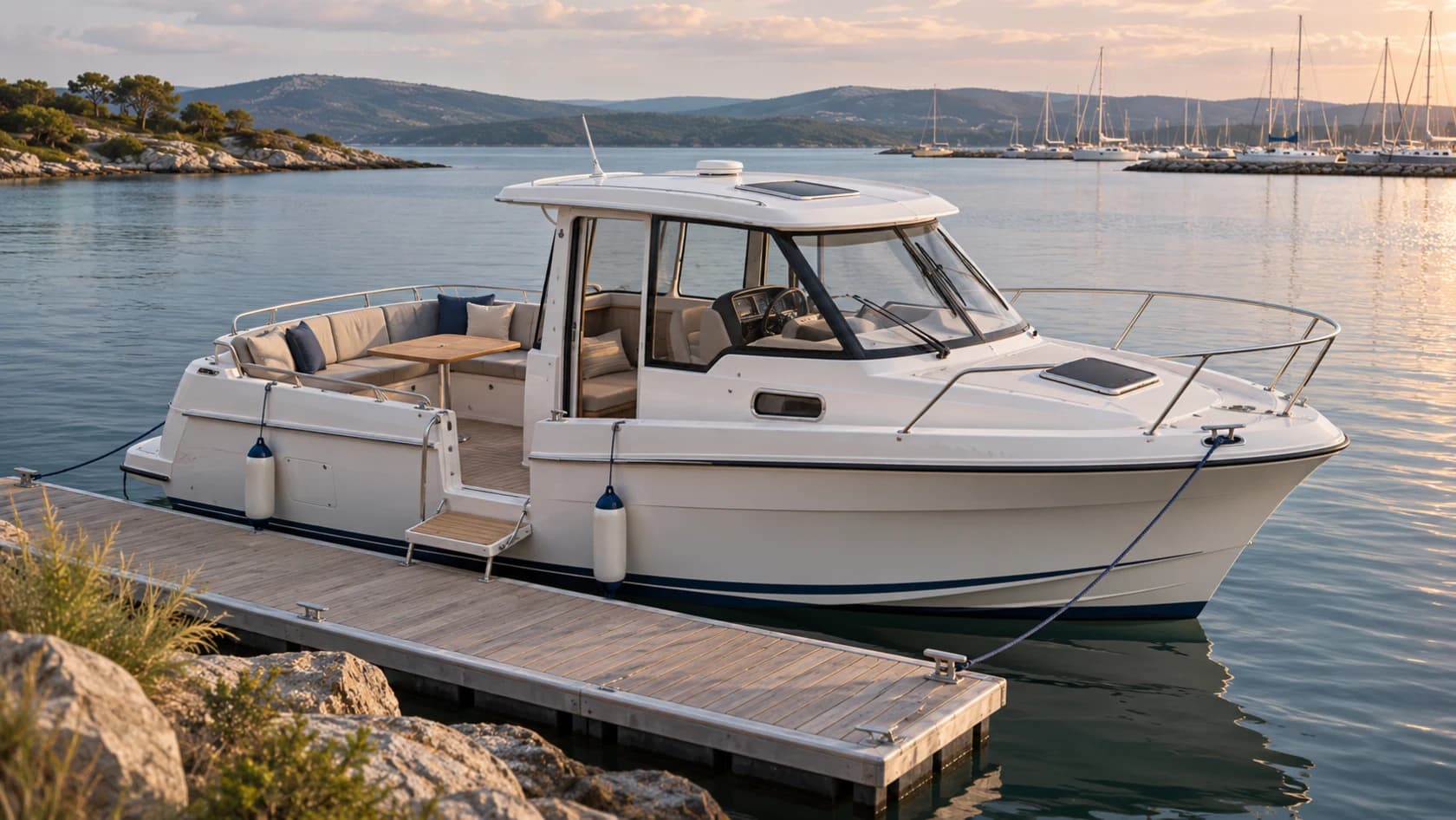

Start with an ordinary day afloat. Practical layout comparisons and two worked shortlist decisions show how crew, routes and storage change the boat you should choose.
Choose a boat for an ordinary day afloat, not the longest holiday you can imagine. Where will you leave from, who will usually come with you, and will you return that evening? Those answers should narrow the layout before length, engine power or equipment catches your eye.
Start with three requirements you cannot compromise on, such as room for your usual crew, access to your home berth and a workable storage arrangement. Then add preferences such as a larger sunpad or an extra cabin. A boat that fits the first group deserves a closer look, even if another has more attractive extras.
Describe your normal trip
Write a short brief: starting point, usual destination, time available, people aboard and what you want to do. Include who will handle the boat. A couple who normally go out alone need a different working deck from a group with several experienced people available for lines and fenders.
Be specific about day trips and overnight stays. For day use, shade, usable seats and a convenient way to board may matter more than beds. For overnight use, try the berths, toilet, ventilation and space for bags. A cabin count says little about how comfortably your crew will live aboard.
River fishing and short outings
Layouts to compare: Open boats with room for fishing and equipment, with shelter where needed.
At the viewing: Put your usual gear aboard: is there still a clear route between seats, storage and the working area?
Coastal family day trips
Layouts to compare: Open motorboats, rigid-hulled inflatable boats (RIBs) and day boats with some shelter.
At the viewing: Compare seats usable underway, shade, the toilet arrangement and boarding access, not just sunbathing space.
Coastal weekends with overnight stays
Layouts to compare: Cabin motorboats with accommodation for the people actually staying aboard.
At the viewing: Try the beds and check whether cooking, toilet use and moving through the cabin work when bags are stowed.
Weekends spent sailing
Layouts to compare: Cruising sailboats with sail controls your usual crew can manage.
At the viewing: Check how lines are reached, visibility from the helm, draft and mast clearance on your routes.
Longer river trips with nights aboard
Layouts to compare: Cabin boats with a sheltered helm and space for longer stays.
At the viewing: Check sheltered steering, access for mooring, actual draft and clearance beneath bridges on the route.
Use these comparisons to plan a viewing around your activities. Compare usable space as well as length: on a RIB, for example, look at the room between the tubes and around the seating. Picture where your crew and equipment will be during a normal trip.
Match the actual waterway and crew
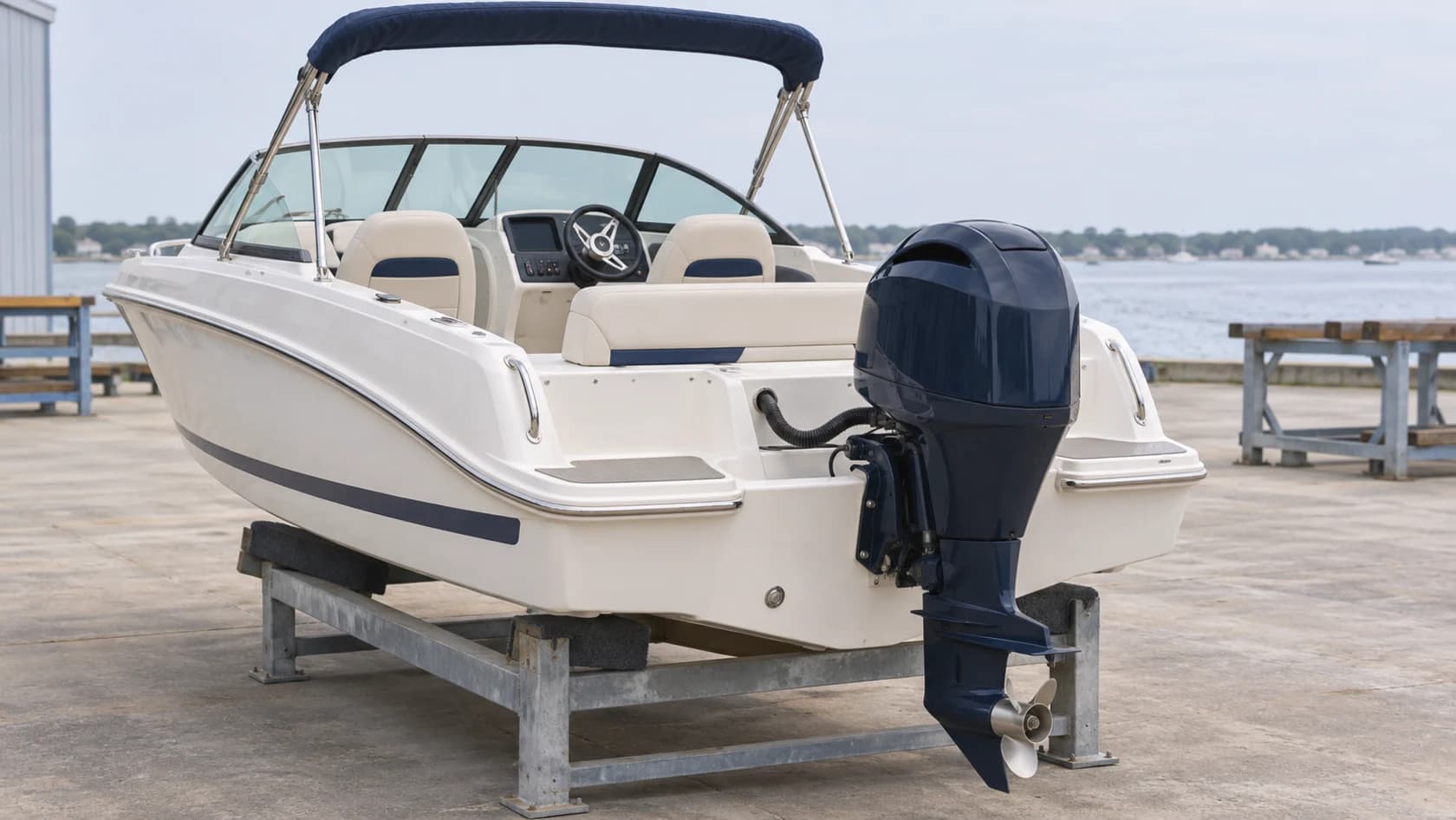
“River” and “coast” are starting points, not complete operating conditions. On a river, consider current, commercial traffic, wakes, changing depth and access to your berth. On the coast, look at exposed sections, shelter and how you would shorten the trip if conditions changed. Check draft to the lowest part of the hull or propulsion system in its operating position. When comparing inboard and outboard layouts, check where the propeller sits on each boat.
Read the boat's documented operating limits and check local navigation requirements. For boats covered by the EU Recreational Craft Directive, design category describes design wind and wave conditions. It does not grant permission for a route or tell you that you should depart in those conditions.
Check the manufacturer's plate, manual and relevant vessel documents for permitted people and loading. Plan around the actual weight of people, equipment, fuel and water, using the manual's loading definitions, including how fixed-tank contents are counted. Then check the practical space: does everyone have a suitable place underway, can they move where needed, and can someone board from the pontoon without an awkward climb?
For children or anyone with limited mobility, try the boarding route and access to the toilet at the viewing. Inspect handholds, changes in deck level and the space needed for suitable lifejackets. The number of people advertised is not a measure of comfort for your particular crew.
Choose handling you can manage regularly
A boat that is pleasant once underway may still be awkward at your home berth. Think through visibility, access to lines and fenders, the distance from the helm to the deck and who will help. If you usually go out alone, explain that before arranging a trial.
During an agreed trial in suitable conditions, ask a qualified skipper to demonstrate low-speed control and a berth approach. With instruction appropriate to your experience, assess whether the working routine suits you. If sailing is the aim, include sail handling and the time needed to prepare and put the boat away, rather than choosing a sailboat mainly for its cabin.
Compare the whole outing, including travel to the boat, loading, launching or leaving the berth, and cleaning afterwards. If you have a short afternoon available, a lengthy launch routine may matter more than a few extra knots.
Resolve transport and storage before size
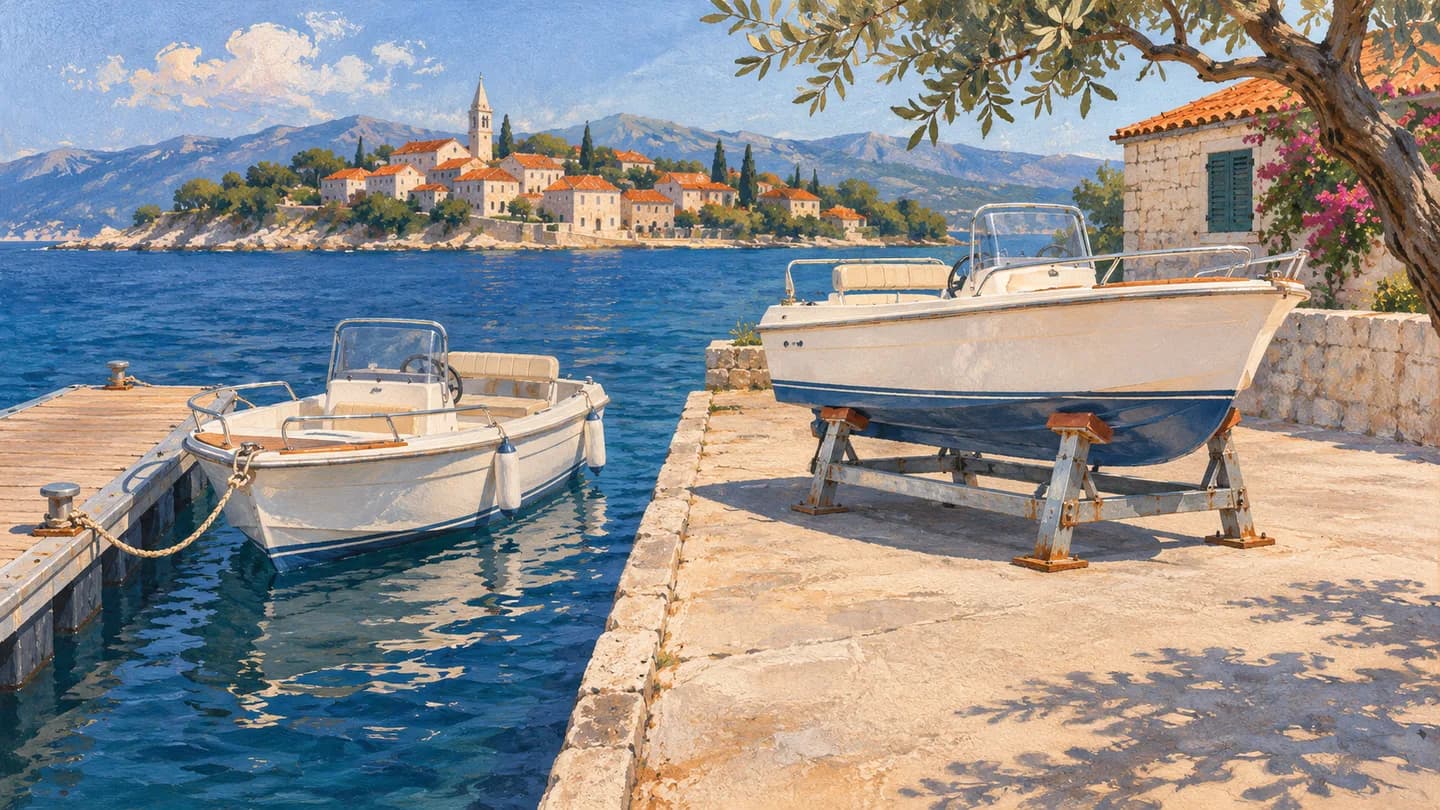
For a berth, confirm accepted overall length, beam, draft and any height restriction with the operator. Include platforms and other projections when providing dimensions. Check how you will board at different water levels and where the boat will go for service and seasonal storage.
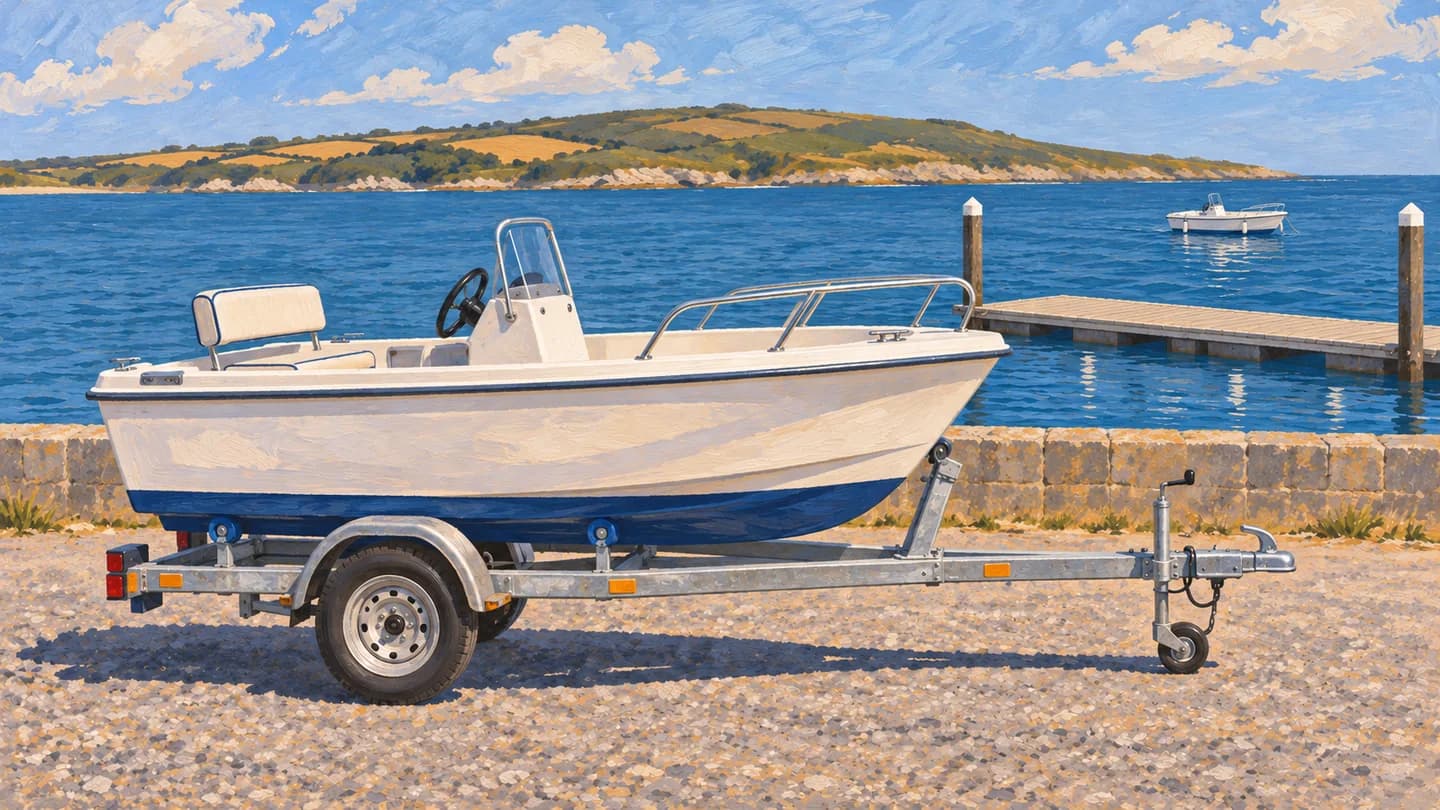
For a trailer boat, use the loaded transport package, not the hull's dry weight. Account for the boat, engine, fuel, water, equipment and trailer, and confirm the mass by weighing when necessary. Check vehicle and trailer ratings, the driver's entitlement and route-specific towing and dimensional rules with a competent local authority or transport specialist.
Visit the intended ramp and storage site. Check access, launch permission, parking, surface and the space needed to manoeuvre. Ask an experienced operator to assess the combination and launch method. If both arrangements are feasible, compare a trailer with a marina berth to see how much time each leaves you on the water.
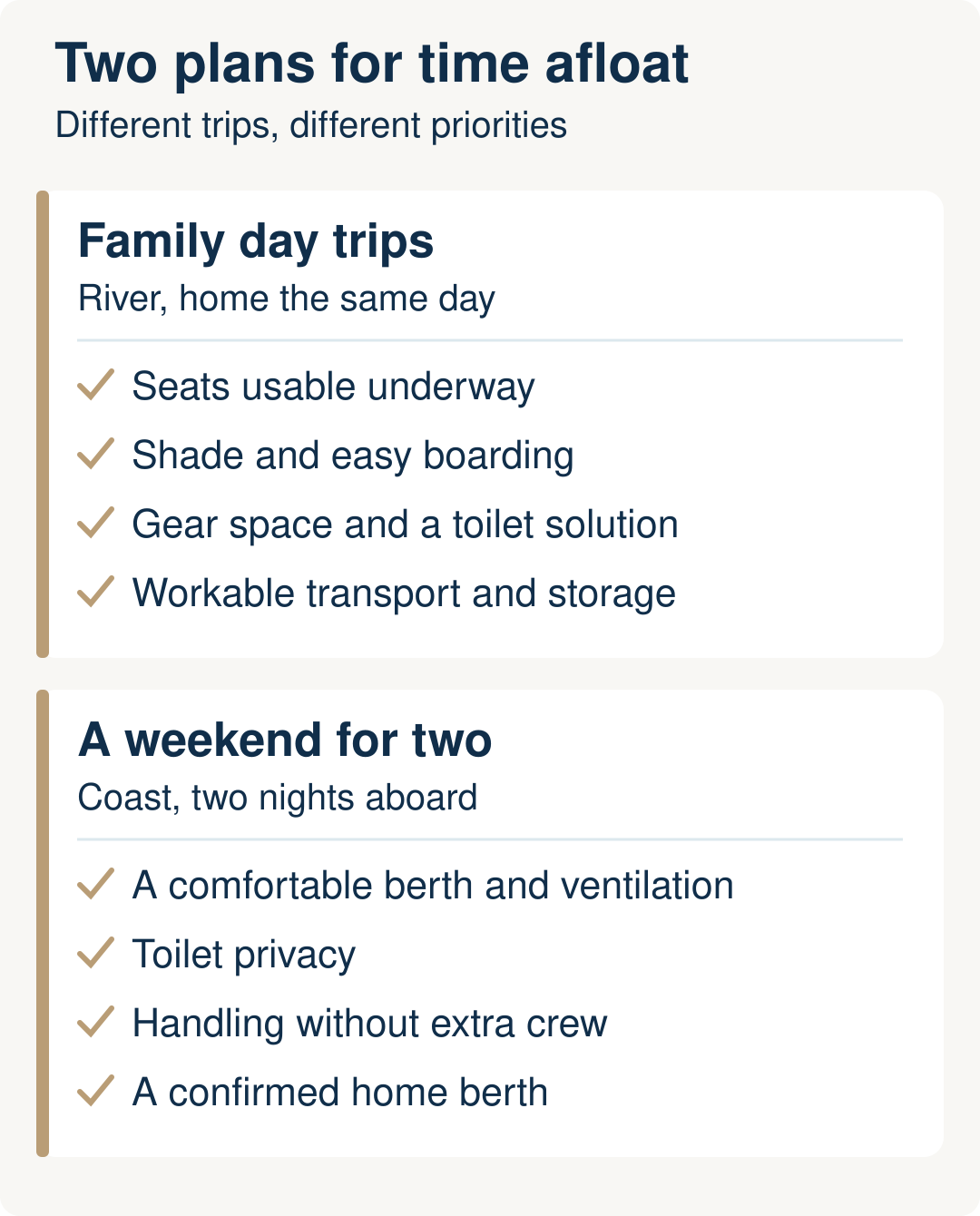
How two buyer profiles change the shortlist
These two illustrative buyer profiles show how the same priorities produce different shortlist decisions. Candidates A and B below are invented layouts, not current listings.
A family taking short river trips
Two adults and two children plan short river outings, return the same day and want to keep the boat at home. Their three firm requirements are suitable seats underway, straightforward boarding and a workable trailer-and-storage plan.
- Candidate A: an open day boat with shade, usable seats and space for bags. It stays on the shortlist if the viewing confirms boarding and a toilet solution, and the loaded trailer combination and home storage are feasible.
- Candidate B: a cabin boat with two berths, but less usable seating and a transport package they cannot accommodate at home.
Decision: shortlist A and set B aside for this brief. B adds beds the family will rarely use while failing their storage requirement. Before arranging a trial of A, confirm the loaded transport mass and dimensions, then check the ramp, tow vehicle and applicable towing rules.
A couple spending coastal weekends aboard
A couple plan two nights aboard on the coast and will keep the boat at a berth. Their firm requirements are a comfortable berth for two, private toilet access and handling they can manage without extra crew.
- Candidate A: a single-cabin layout with a berth they can use comfortably, accessible lines and an engine compartment a technician can reach. A suitable home berth has been confirmed within their annual budget.
- Candidate B: an extra cabin, but a main berth that does not fit them comfortably and awkward access to mooring lines.
Decision: shortlist A. The extra cabin on B does not solve either failed requirement. The next viewing of A should test ventilation, water and bag storage, while an agreed trial with a qualified skipper should check low-speed handling and the berth approach.
Give every candidate the same shortlist sheet
Copy these six lines for each boat:
- Normal trip: route, time available and planned activities.
- Usual crew: people, boarding needs and who will handle lines.
- Firm requirements: three conditions the boat must meet.
- Preferences: three features you would like, in priority order.
- Ownership plan: berth or trailer, annual running budget and work needed before first use.
- Evidence still needed: missing dimensions, records, quotes or trial observations.
Leave an unresolved requirement open until you have evidence. An appealing extra cannot compensate for an unsuitable berth or a transport combination you cannot use. Once those constraints are satisfied, compare the remaining boats on the features that will improve your normal trips.
Keep purchase money, initial work and ongoing costs separate. Ask for berth or storage and model-specific service quotes before committing to a size. The RYA's boat-buying guidance highlights ongoing maintenance, insurance and mooring costs alongside the purchase price.
Turn the shortlist into a useful viewing
Before going afloat, arrange suitable training, lifejackets, communications and a crew briefing, and check current weather and local navigation information. The RNLI's boating guidance covers these safety basics. For regional planning resources, consult DHMZ's Croatian Adriatic marine forecast and Plovput for Serbian waterways, alongside the information required for your actual route.
Use the Adriatic used-boat buying guide for the purchase process and the inspection checklist when assessing condition. Those are the next tasks once the boat fits your intended use.
Browse boats for sale on Yahte with your shortlist sheet beside you. Send sellers your usual crew and trip plan, then ask for the dimensions, layout photographs and records needed to decide whether a viewing is worthwhile.