
Engine location is only part of the choice. Compare three propulsion layouts, build a useful service quote and check fuel use per nautical mile.
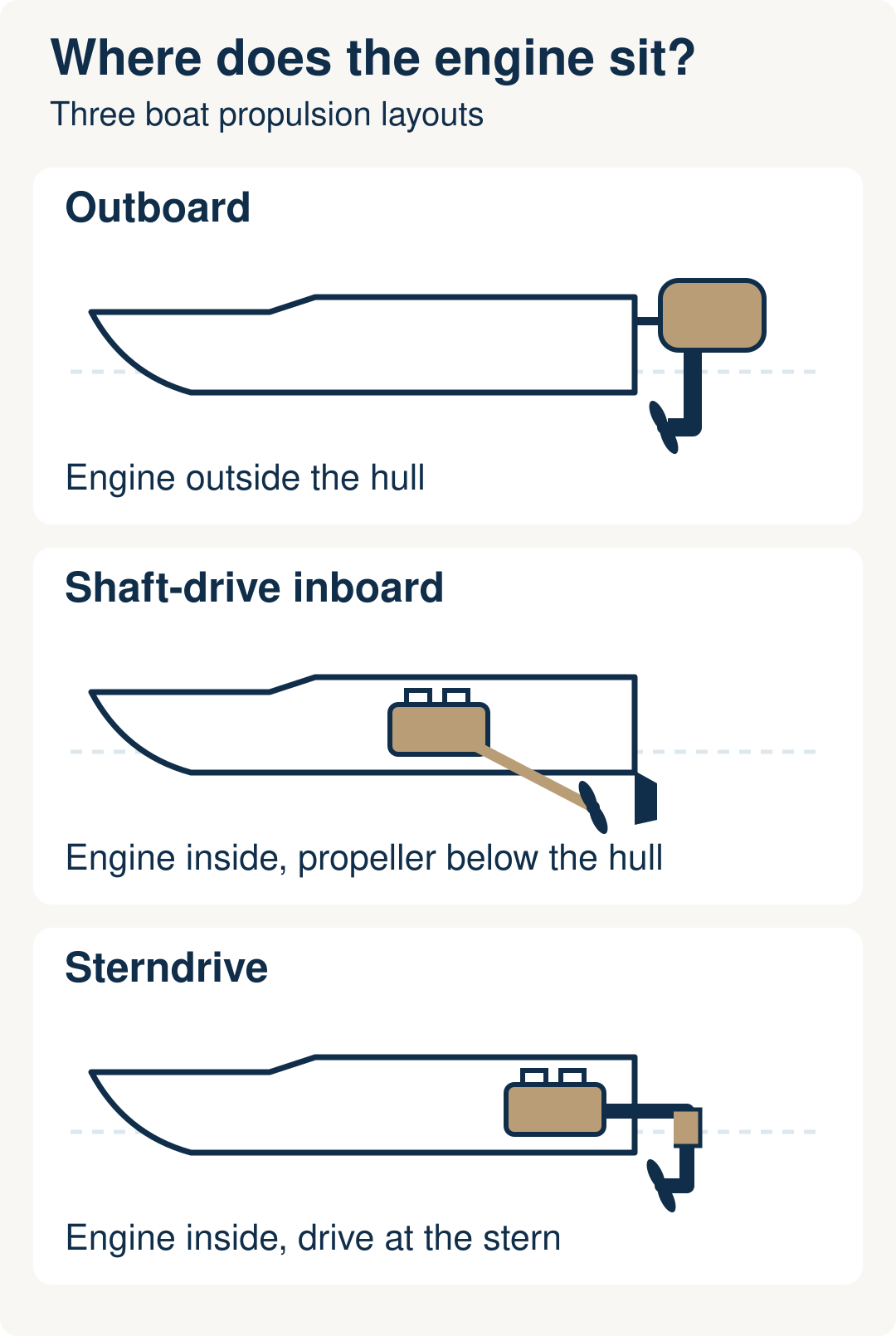
Choose the propulsion package around the boat you need and the way you can maintain it. An outboard keeps the engine outside the hull. A shaft-drive inboard puts the engine inside and drives a propeller beneath the boat. A sterndrive also has an engine inside, but connects it to a steerable drive at the stern.
Where to start:
- If interior space is a priority, shortlist outboards, then check stern access and room to tilt the installed engine.
- If a clear stern platform matters most, compare shaft-drive inboards with sterndrives. On the shaft-drive boat, check underwater draft and access to the shaft and transmission. On the sterndrive boat, price engine and external-drive work separately.
- If two boats both fit your use, favour the installation with accessible service points, dated records and a workshop that supports the exact model nearby.
Compare three layouts, not two labels
An advertisement saying “inboard” does not tell you enough. Ask whether the boat has a shaft drive or a sterndrive, then obtain the engine and drive model details. Mercury Marine's propulsion comparison explains the basic distinction.
Outboard
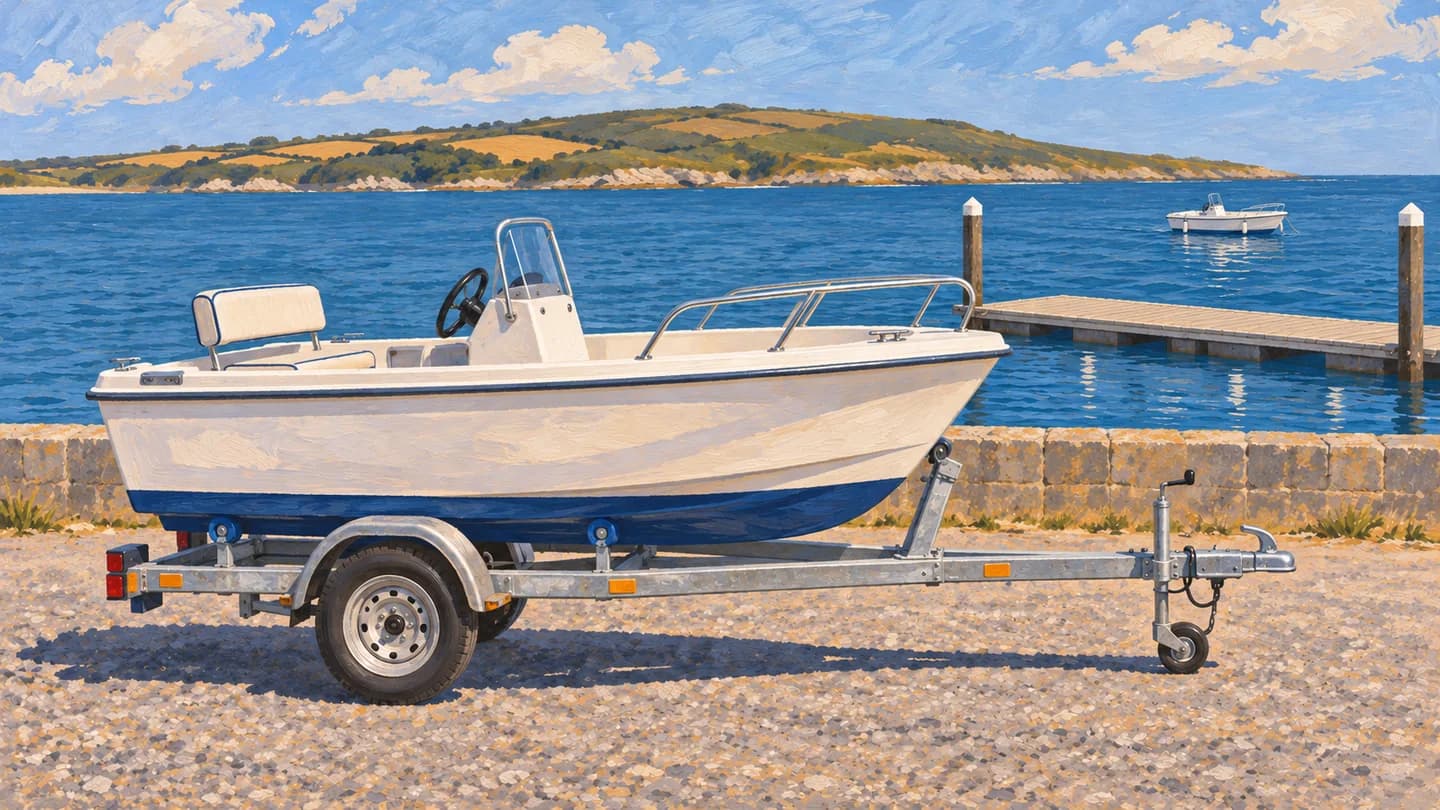
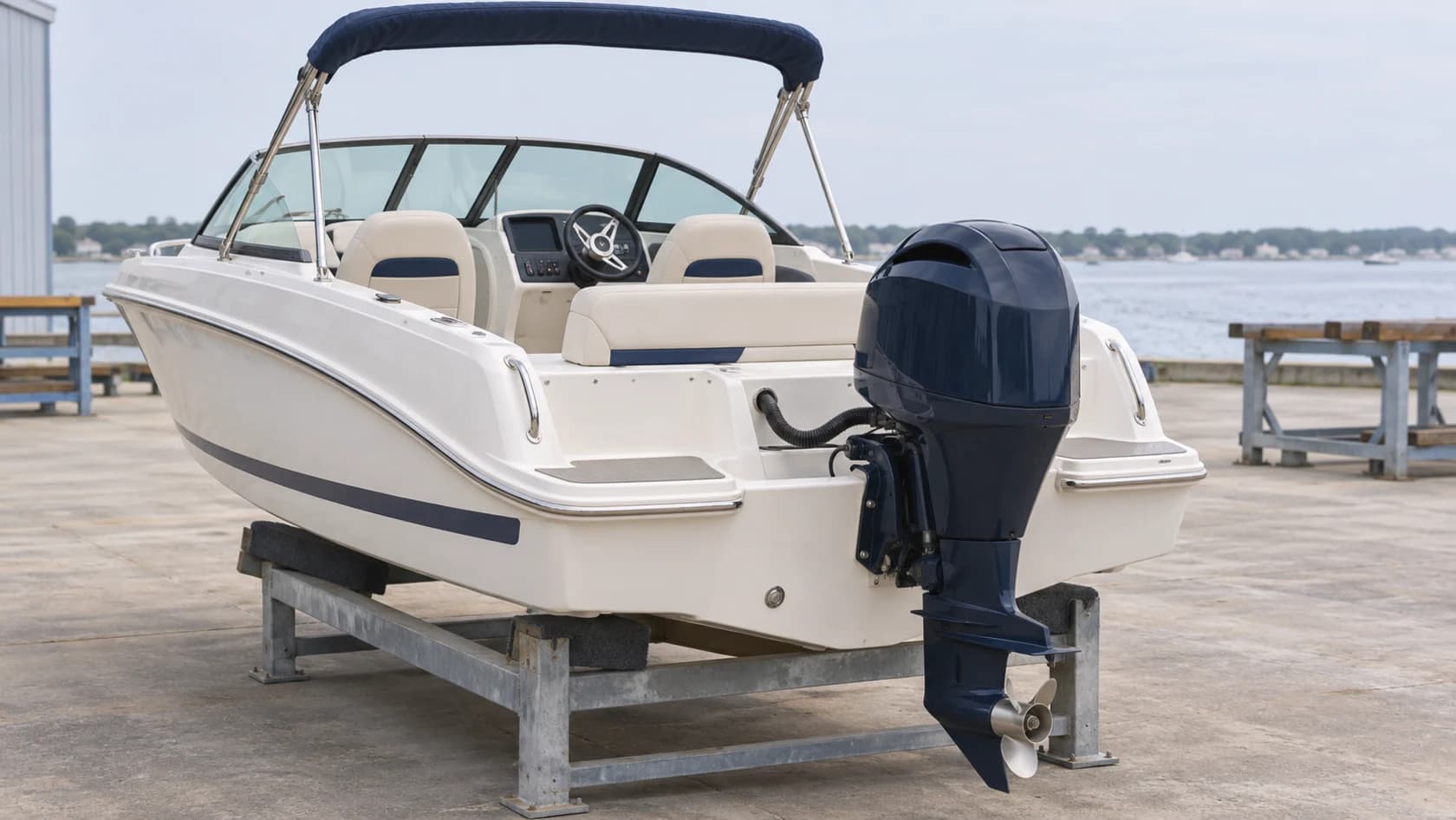
Space and access: The engine sits at the stern, outside the hull. It leaves room inside but occupies part of the stern area.
Before buying: Can a technician reach the service points? Can the installed engine tilt clear of the water, and is there space for it at the berth or in storage?
Shaft-drive inboard
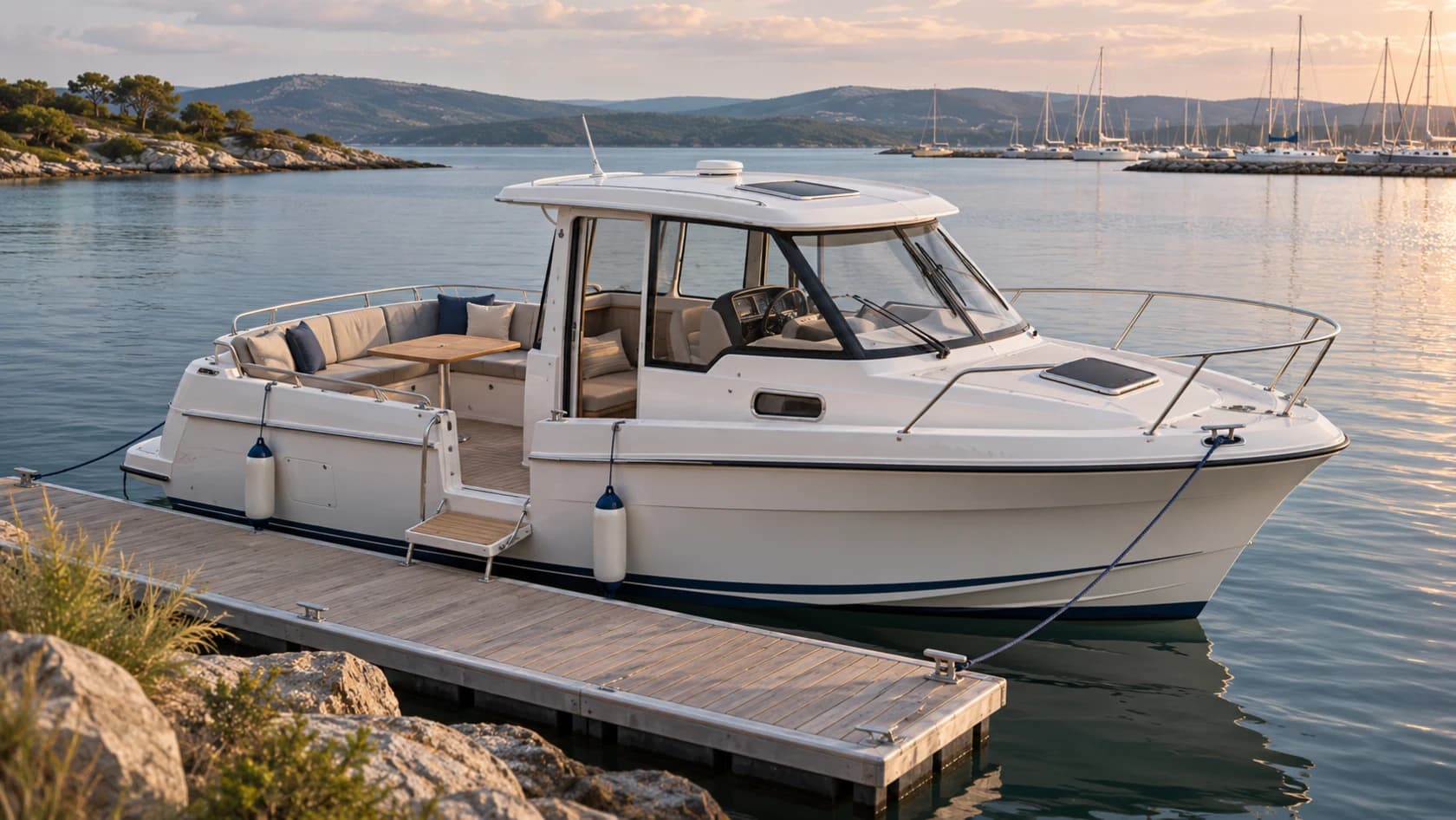
Space and access: The engine is inside; a shaft connects it to the propeller, with a separate rudder for steering.
Before buying: How are the engine, transmission and shaft installation reached? What draft does the complete underwater arrangement require?
Sterndrive, also called I/O
Space and access: The engine is inside; the external drive steers and trims. The engine compartment still needs working access.
Before buying: What work is due on the engine and on the drive? How will the yard reach the external components and handle the boat?
Look at working access, not just an open hatch
At a viewing, ask a technician to explain how routine service points are reached. A large hatch can still leave a filter behind the engine or make a pump awkward to remove. On an outboard installation, a narrow stern platform or tightly grouped engines can also restrict access.
Ask what must be moved for a major repair and how the engine would come out. A removable seat, lifting arrangement or access panel can change the job considerably. This is especially useful when comparing older cabin boats whose engines look similar in the advertisements.
Identify a workshop that supports the exact engine and drive generation near where you will keep the boat. Ask about parts availability, diagnostic equipment, travel to the berth and workshop lead times. That gives you a more useful ownership comparison than a broad claim that one layout is easier to service.
Ask for comparable service quotes
Send each workshop the model and serial details, service records, planned use and storage arrangement. Have it separate routine work from overdue or condition-dependent repairs. Mercury's maintenance guidance makes clear that intervals depend on the engine and drive model; use the applicable manual's hour and calendar requirements.
Use the same six quote lines for each boat:
- Engine service: Work due, parts, fluids and labour for the identified model.
- Drive or transmission: Separate work on the outboard lower unit, shaft-drive installation or sterndrive, as applicable.
- Installation-specific work: Applicable seals, anodes, alignment and sterndrive bellows work, including the reason each item is due.
- Access and boat handling: Travel, lifting, ashore time and any dismantling needed for access.
- Seasonal preparation: Preparation for the actual storage location and a separate return-to-service scope.
- Price basis: Tax, exclusions and the distinction between routine service and additional repairs.
Compare the included work before comparing totals. One quote may cover only the engine while another includes drive work and lifting. If boat handling is already included in your storage contract, show that to the workshop so it does not appear twice in your budget.
Compare fuel over the distance you will travel
Litres per hour can be misleading when boats travel at different speeds. Divide hourly consumption by speed in knots to get litres per nautical mile. Use speed over ground for route costs, so the effect of current is included. For the same route, that tells you more about fuel cost, while the journey time shows whether the cruising pace suits you.
Consider a hypothetical 40-nautical-mile trip with fuel at EUR 1.60 per litre. Boat A cruises at 20 knots using 20 litres per hour; Boat B cruises at 10 knots using 15 litres per hour. These are example inputs for two unnamed boats, not measured results for either propulsion type.
| Measure | Boat A | Boat B |
|---|---|---|
| Cruising speed | 20 kn | 10 kn |
| Hourly fuel use | 20 L/h | 15 L/h |
| Journey time | 2 h | 4 h |
| Fuel per mile | 1 L/nm | 1.5 L/nm |
| Trip fuel | 40 L | 60 L |
| Fuel cost for 40 nautical miles | EUR 64 | EUR 96 |
Boat B burns less each hour but uses more fuel for the trip. For real candidates, request figures at cruising speeds you would actually use, with comparable loading and recorded conditions. Separate petrol and diesel prices where relevant. A real passage fuel plan also needs an appropriate reserve.
Check space, storage and replacement together
Walk through the stern as you would use it: boarding, reaching the ladder, handling lines and storing fishing or swimming equipment. An outboard may free interior space while changing the route to the water. An inboard or sterndrive layout may offer a clear platform but put an engine enclosure where you would otherwise want storage or seating. Judge the actual deck plan.
For a trailer boat, check the complete transport envelope with the engine in its prescribed transport position. For a boat kept afloat, ask how planned servicing and seasonal preparation will be performed. Follow the model manual for tilting, flushing and storage; the correct arrangement differs between installations.
If replacement is part of your plan, request an installed price. Include removal, fitting, compatible controls, steering and electrical work, as well as any boat handling. Have the builder or a qualified installer confirm permitted power, engine mass and mounting suitability before treating a replacement engine as a straightforward swap.
Shortlist the installation you can live with
An unresolved access, storage or service-support problem is a reason to pause the purchase, whatever the engine label. Keep a candidate on the shortlist when you can explain how routine work will be done, which overdue jobs are priced and who will support the installation.
Then compare two or three real candidates using the same quote worksheet and cruising-use assumptions. Use the used-boat inspection checklist for the condition-assessment stage and arrange independent technical assessment of a serious candidate.
Browse boats for sale on Yahte and ask sellers for the exact engine and drive models, dated service records and photographs showing access around the installation.